

30.11.2022 15:10 Countries: Syrian Arab Republic, Türkiye Source: Turkish Red Crescent Society Please refer to the attached file. MAIN FINDINGS 1 Findings from Focus Group Discussions indicate limited access to job opportunities, with the accessible ones being irregular and precarious. The most mentioned sectors in the FGDs are textile manufacturing and construction. 2 Social networks are observed to be a critical factor in access to employment; the most common method of finding employment is through acquiring information from social circles that consist mainly of refugees1 which include friends and acquaintances. 3 Employed individuals frequently change jobs and it is mainly related to low wages. The frequency of job changing can be seen as manifestation of impacts of employment under irregular and precarious conditions. 4 Among factors affecting employment related to context, such as policy structure, the most discussed issues are discrimination, not being able to obtain a work permit and related legal procedures, traditional gender roles, and the inability to provide diploma equivalency. Language barrier and advanced age are the most prominent factors related to individual profiles. 5 Most participants indicated that informal work is not a matter of preference but an obligation despite all disadvantages entailing such employment. When participants listed their reasons behind informal employment, the leading ones include employers being reluctant to acquire work permit, economic hardships households experience, and concerns about losing the ESSN coverage since ESSN assistance operates as a reliable economic support mechanism. When it comes to challenges at the workplace, participants referred to underpayment, no payment at all, irregular payment, and lack of job security. They also shared that such difficulties of informal employment can be overcome by formal employment where they can also benefit from fringe benefits as an additional advantage. 6 According to some participants, having a residence permit increases the likelihood of one to be hired, as well as expediting the whole employment process. 7 Regarding their future career plans, majority of participants mentioned that they would like to start their own business provided that work-related challenges are completely or partially eliminated.
30.11.2022 06:30 Countries: Syrian Arab Republic, Türkiye Source: Development Initiatives Executive summary Over 11 years after the start of the Syria crisis, Türkiye is host to 3.7 million Syrian women, men, and children. Local and national actors , including the government and civil society, play a central role in meeting the needs of displaced communities, with support from international donors and organisations. Ensuring LNAs have access to sufficient, quality funding as directly as possible is essential for an effective and locally led response. Donors and international aid organisations have made various commitments to provide funding more directly to those affected by crisis. However, current reporting mechanisms mean there is no way to comprehensively monitor these commitments, to track how much international funding ultimately reaches LNAs or the means by which it is disbursed. This research, carried out by Development Initiatives and the , sought to fill this evidence gap in the context of the Syrian refugee response in Türkiye by tracking international funding flows to local and national actors. It also investigated issues around the quality of funding and partnerships between international and national actors – central to discussions on the localisation of aid in Türkiye and more broadly.
29.11.2022 22:02 Country: Türkiye Source: International Federation of Red Cross And Red Crescent Societies Please refer to the attached file. NATIONAL SOCIETY PROFILE The Turkish Red Crescent Society, established in 1868, is the largest humanitarian organization in the country. As an auxiliary to the public authorities, the National Society provides aid for vulnerable people in need during disasters and non-emergency contexts. It uses its extensive in-country assets, human resources, and government and civil society relations for the effective and efficient implementation of activities across all sectors. This includes disaster management as well as social, migration and blood services. The Turkish Red Crescent Society’s vision is to serve as a model in humanitarian aid services in Türkiye and around the world, and to stand by people in their most challenging times. Prepared with the contributions of all stakeholders, the Turkish Red Crescent’s strategic plan for 2021–2030 comprises a total of 11 goals to reinforce social resilience and develop strong governance and institutional trust. With a mandate to support the public authorities in humanitarian services, the National Society strives towards eliminating hunger and poverty in society, helping migrants and promoting healthy ageing, meeting blood needs sufficiently, developing resilience against natural hazards and human-made disasters, and creating a more viable environment with better access to education. In its objective of enhancing strong governance and institutional trust, the Turkish Red Crescent aims to promote a network of transparency in financial management, supported by technology, efficiency and accountability. It also seeks to improve stakeholder relations and financial sustainability. As part of its migration response, the Turkish Red Crescent has built a strong capacity which it commits to share with other stakeholders to reach more communities in need. This focuses on cash and social services – including multi-sector needs such as health, protection and livelihoods through a nationwide network of community centres. It also emphasizes planning, monitoring, evaluation and reporting, together with community engagement and accountability approaches.
24.11.2022 15:20 Countries: Syrian Arab Republic, Türkiye Sources: International Federation of Red Cross And Red Crescent Societies, Turkish Red Crescent Society Please refer to the attached file. 1. INTRODUCTION 1.1. PROGRAMME Turkey is a host to over 4 million registered refugees and asylum-seeker, 3.75 million Syrian nationals, and close to 320.000 international protection3 status holders and asylum-seekers of other nationalities. Some refugees live in thirteen multicultural camps which are temporary accommodation centers. In response, the Government of Turkey has granted temporary or international protection to refugees, depending on the nationality, and has provided them with free access to services such as education and health once they have registered with the Presidency of Migration Management . To support the government’s efforts, the Emergency Social Safety Net programme was launched in November 2016 to help cover the basic needs of the most vulnerable refugees living outside camps under temporary or international protection. It provides beneficiary refugee households with a debit card giving them access to a fixed amount of money each month. Complementary ESSN project intends to improve the living standards of the most vulnerable refugees under Temporary and International Protection as well as humanitarian residence permitholders and international protection applicants in Turkey through the provision of regular cash assistance to cover their basic needs. Financed by the EU, the programme will be implemented by the MoFSS as a lead applicant in partnership with the Turkish Red Crescent as a co-applicant, and in cooperation with other relevant stakeholders, which have a well-tracked record in the provision of humanitarian aid to the most vulnerable refugees through a coordinated and systematic approach. C-ESSN project aims to include the foreigners who have ID number starting with 99, who are disadvantaged to be directed to livelihoods, and have Temporary Protection Status / International Protection Status / International Protection Status Application and Humanitarian Residence Permit. The project is implemented through KIZILAYKART Platform, and supported by the Directorate General of Population and Citizenship Affairs and Presidency of Migration Management .
23.11.2022 22:50 Country: Türkiye Sources: International Federation of Red Cross And Red Crescent Societies, Turkish Red Crescent Society Please refer to the attached file. 1. INTRODUCTION 1.1. PROGRAMME Turkey is a host to over 4 million registered refugees and asylum-seeker , 3.75 million Syrian nationals, and close to 320.000 international protection3 status holders and asylum-seekers of other nationalities. Some refugees live in thirteen multicultural camps which are temporary accommodation centers. In response, the Government of Turkey has granted temporary or international protection to refugees, depending on the nationality, and has provided them with free access to services such as education and health once they have registered with the Presidency of Migration Management . To support the government’s efforts, the Emergency Social Safety Net programme was launched in November 2016 to help cover the basic needs of the most vulnerable refugees living outside camps under temporary or international protection. It provides beneficiary refugee households with a debit card giving them access to a fixed amount of money each month. Complementary ESSN project intends to improve the living standards of the most vulnerable refugees under Temporary and International Protection as well as humanitarian residence permitholders and international protection applicants in Turkey through the provision of regular cash assistance to cover their basic needs. Financed by the EU, the programme will be implemented by the MoFSS as a lead applicant in partnership with the Turkish Red Crescent as a co-applicant, and in cooperation with other relevant stakeholders, which have a well-tracked record in the provision of humanitarian aid to the most vulnerable refugees through a coordinated and systematic approach. C-ESSN project aims to include the foreigners who have ID number starting with 99, who are disadvantaged to be directed to livelihoods, and have Temporary Protection Status / International Protection Status / International Protection Status Application and Humanitarian Residence Permit. The project is implemented through KIZILAYKART Platform, and supported by the Directorate General of Population and Citizenship Affairs and Presidency of Migration Management
23.11.2022 22:50 Country: Türkiye Source: European Commission's Directorate-General for European Civil Protection and Humanitarian Aid Operations Please refer to the attached Map.
23.11.2022 22:50 Countries: Syrian Arab Republic, Türkiye Sources: Protection Cluster, UN High Commissioner for Refugees Please refer to the attached file. INTRODUCTION This guidance is the product of the dedicated Task Team established for the use of CBI in GBV risk mitigation, prevention, and response by 3RP partners in Türkiye to harmonize and increase CBI support to survivors and those at risk of GBV. TT has completed its task as of completion of this document. TT was established by the Cash-Based Interventions Technical Working Group to create this inter-agency guidance note through consultations with and the collaboration between its member organizations, which focused on gender-based violence and cash-based interventions in the refugee response context in Türkiye. CBI TWG identified the CBI and/or GBV expert members of the TT based on their self-nomination. Members of the TT were CARE, GIZ, IFRC, IGAMDER, IOM, TRC, UNFPA, UNHCR, UNICEF and Welthungerhilfe. In addition, ASAM and KADAV provided contributions on an ad-hoc basis. Chair and iNGO technical advisor of CBI TWG, CARE and UNHCR were anonymously selected as chairs of the TT. Objectives, tasks, roles, responsibilities and meeting timeline of the TT were defined by the Terms of Reference document. This guidance document benefited from various inter-agency coordination tools, analysis and good practice reports and guidance materials; most significantly from the “Cash and voucher assistance and Gender Based Violence - Standard Operating Procedures ” by NorthWest Syria Cash Working Group.
23.11.2022 13:50 Countries: Türkiye, World Source: United Nations Population Fund Please refer to the attached files. A. INTRODUCTION For the first time in the Council’s history, the 50th session of the United Nations Human Rights Council included “a panel discussion on menstrual hygiene management, human rights and gender equality” under a separate heading. In his opening remarks on June 21, 2022, the UN High Commissioner for Human Rights noted that menstrual health is an inseparable part of sexual and reproductive health and rights, and is an important determinant for the realization of all human rights of women and girls in all their diversity, ensuring gender equality and Sustainable Development Goals. There was a good reason for this speech and panel discussion. Menstruation, which is a natural fact of life, affects billions of people. The number of menstruating women and girls and menstruating LGBTI+ people in the world reaches 1.9 billion every month; this means that 800 million people between the ages of 15 and 49 menstruate every day. Gender inequality, discriminatory social norms, cultural and religious taboos, poverty and lack of basic services lead to unmet menstrual needs. Menstruating people, especially those living in developing countries or under unusual circumstances, before and after menstruation begins, do not have access to adequate information, educational opportunities, menstrual products they need, water, sanitation and waste infrastructure, and the right to live this period in a positive environment without discrimination. It is therefore time to break the silence on menstruation and recognize it as a human right, a gender equality and a public health issue. Apart from the reports of international organizations evaluating their own activities on the issue and the studies carried out by non-governmental organizations on their target groups, our knowledge is based on a limited number of studies. Although we can only see the tip of the iceberg above the water, there is increasing interest in menstrual hygiene management information. This is because, although not explicitly stated, menstrual hygiene management is closely linked to Sustainable Development Goals 3 “Health and Quality Life”, 4 “Quality Education”, 5 “Gender Equality”, 6 “Water and Sanitation”, 8 “Decent Work and Economic Growth” and 12 “Responsible Production and Consumption”. It is known that in some societies, instead of using explicit terms for menstruation, expressions such as “cycle”, “period”, “poverty” and even “curse” have been used for a long time. Similarly, expressions such as “period”, “being sick” or “visit from my aunt” are being used in Türkiye. In many societies of the world, menstruation is a cause of stigmatization and discrimination. Issues related to menstruation are considered “shameful” and taboo; menstruating people are considered “dirty” or harbingers of bad luck. Such that, the adjective equivalent of the word “dirty” is defined as “a woman who is menstruating” in the dictionary of the Turkish Language Association.6 In some rural areas of India, women are considered dirty and impure “untouchables” during their menstrual periods. For women and girls, this results in a loss of self-esteem and exclusion from many aspects of social and cultural life. The restrictions imposed -limiting cooking activities for menstruating women, denying access to certain foods and reducing interactions with male members of their families, restrictions on worship- are widespread. It is known that at least three out of every four girls face a religious restriction in India. During menstruation, prayers are not performed and the Qur’an is not touched. Similarly, Hindu girls are forbidden to pray and are asked to refrain from pooja . These restrictions can be such that menstruating women and girls are not allowed to walk in their own homes. They are forced to spend this period in some kind of out-of-home space or “menstrual hut”. In India, this practice has resulted in deaths of many girls due to snakebites and other causes. In Nepal, a similar practice called “chhaupadi”, which has recently been banned but is believed to continue in rural areas, routinely exposes women and girls to the cold and increased risk of sexual violence and animal attacks. “Menarche”, defined as the first menstruation, is an important biological milestone. Although it varies from person to person, it usually starts between the ages of 10-16.10 Menstruation is a new stage in a girl’s life but it also means new sensitivities and vulnerabilities. Therefore, it is very important for girls to be informed on the issue before their first menstruation. In major studies and systematic reviews, it was found out that only half of the girls have been informed about menstruation before menarche. In majority of the cases studied the source of information about menstruation is expressed as the mother. Later on, information is obtained from other women in the family such as older sisters, aunts, and aunts-in-law. The Internet is rapidly becoming one of the most important sources of information. In a study conducted in Türkiye in 2019, it was assessed that the young people frequently use the web pages to reach health-related information; but approximately one-fourth of the information about menstruation viewed on the web pages was accurate, and a large part of the information was insufficient.13 In order to ensure that young girls maintain a healthy reproductive life, they should be equipped with accurate information on safe and hygienic menstrual practices, and this information should be provided continuously in such a way to address possible concerns and questions. One of the most important issues during menstruation is access to the material related to the blood absorption. There are many studies revealing that sanitary pads are the most preferred menstrual product for women and girls. However, what is available is not always what is preferred; and in many cases, there is a shortage of materials. Many low-income women and girls have problems when buying menstrual products. Described as “menstrual or period poverty”, this situation also refers to the increased economic vulnerability that women and girls face when trying to obtain essential items such as pads, tampons and underwear during their periods. A recent systematic review of data obtained in Ethiopia showed that young girls who do not receive an allowance from their parents are 49% less likely to manage menstrual hygiene well than their peers who do. Moreover, it is known that problems regarding the price of materials are not unique to low-income countries. A study conducted in Spain revealed that respondents’ choice of menstrual products was often influenced by price.Another study conducted in the UK in 2017 revealed that one in 10 girls could not afford the products and more than 137,000 children missed school days due to period poverty. In a study conducted in Türkiye, only one in four respondents reported that they never had difficulty when purchasing menstrual products. Three out of four respondents had difficulty in accessing menstrual products, albeit with varying degrees.20 Difficulty in obtaining menstrual products can keep women and girls out of school or work; which can have persistent negative consequences on their education and economic opportunities. The most important environment for young girls outside home is the school environment. However, studies on schools have shown that access to hygiene facilities such as water, soap and trash bins with lids, as well as security facilities such as lockable doors are problematic issues in schools. A study conducted in Nigeria in 2015 showed that only 42% of restroom cabins had functional locks and only 25% of schools had handwashing sinks and soap, while most cabins had broken doors and ventilated poorly. Similar situations exist in many low and middle-income countries. Unhygienic sanitation facilities and inadequate recreational facilities are not the only problems girls face in the school environment. Situations such as experiencing physical discomfort, being teased and feeling distracted in class are also common. Inability to manage their menstrual hygiene at school results in absenteeism, and consequently a downturn in educational achievements and dropping out of school. The association of use of unhygienic material with urogenital infections in women and girls has also been studied. In a hospital-based case-control study in India, it was found out that use of reusable absorbent pads was associated with more symptoms of urogenital infection. This result was attributed to unhygienic conditions for cleaning and drying the materials. Therefore, the environmental conditions in which women and girls spend their menstrual periods, and access to water, soap and other hygiene facilities are determinants of the process in menstrual hygiene management. Another important aspect of menstrual hygiene management is the waste disposal. Disposal of pads, cloths and other menstrual products is done by flushing them down the toilet directly or wrapped in bags/paper, or by dumping them in an indoor or outdoor sanitary waste system and by burying or incinerating them. Community beliefs also influence the way the women and girls dispose of menstrual products. In some places women burn their menstrual pads to avoid disrespecting animals or nature. In some communities, women believe that menstrual products should be buried to prevent them from being used for black magic or to prevent attraction of evil spirits. Some communities also believe that improper disposal of these products can cause infertility. With a management process that begins with access to information, millions of menstruating people can manage their menstrual cycle in a dignified and healthy way. Building on the WHO definition of health as “a state of complete physical, mental and social well-being” , menstrual health is considered to be “an encompassing term that includes both menstrual hygiene management as well as the broader systemic factors that link menstruation with health, well-being, gender, education, equity, empowerment, and rights”. Menstrual hygiene management is especially critical during humanitarian crises, when maintaining privacy is often difficult and hygienic facilities are limited. In humanitarian crises, the focus is primarily on the most immediate vital needs such as food, shelter and health. Menstrual hygiene management needs are often neglected. Yet, especially when on the move or displaced, women and girls often do not change their culturally appropriate clothing and hygiene items and may not be able to seek basic services, including humanitarian assistance.27 In some cases, the affected group is very large. For example, UNFPA estimates that 1.4 million women and girls of reproductive age were affected by the earthquake in Nepal in 2015. When asked about their needs, these women cited the need for menstrual products immediately after food products. It is known that women who have been living in refugee camps for years in Uganda sell their food supplies to meet their needs for pad.It was found out that almost half of Venezuelan asylum-seeking women and girls who crossed the border of Brazil did not have any hygiene items, more than half could not wash their hands when they wanted to, and three-quarters did not feel safe to use the toilets. Türkiye, as the world’s largest refugee hosting country, hosts nearly 4 million refugees and asylum-seekers, 3.6 million of these are Syrians under temporary protection. One fourth of refugees are women and girls of reproductive age.30 UNFPA’s directive on sexual and reproductive health and gender-based violence provides the organization with an unequaled expertise and comparative advantage in integrating effective menstrual hygiene management into emergency programming. UNFPA Türkiye, in cooperation with both international and local institutions and organizations, carries out projects in different regions of Türkiye to meet the ever-increasing need in the biggest humanitarian crisis of recent times, reaching especially women, girls and the most vulnerable groups to increase their access to rights and services, and to enable them to lead more equal, healthy and safe lives. It provides various services to refugees especially in reproductive health by establishing Women and Girls Safe Spaces , which operate as primary health centers with specific clinical and psychosocial services, and organize empowerment activities for women and girls, and distribute hygiene kits, maternity and reproductive health kits through these centers.31 In relation to menstrual hygiene management, UNFPA considers the needs of menstruating women and girls as a fundamental right issue and is committed to create a world where no woman or girl is prevented from accomplishing her potential due to her menstrual period.
22.11.2022 12:10 Country: Türkiye Sources: Turkish Red Crescent Society, UN Development Programme Please refer to the attached files. Due to its geological structure, topography and climactic characteristics, Turkey has been exposed to disasters and considered under high risk and one of the disaster-prone countries. In this scope, there is a need for adopting and promoting a culture of risk prevention as well as mitigation in the society, accelerating training activities, using modern technologies and communication facilities, expanding cooperation at the local, regional and international level. Frequent hazards, combining with earthquakes in Elazığ and İzmir as well as Covid-19 outbreak had profound impacts on people lives and created new vulnerabilities. In Turkey, where more than 4 million migrant population resides most of whom are vulnerable, it has become indispensable necessity for seeking new ways in order to address the needs of communities, to include both migrants and local communities for preparatory actions against disasters and to maximize the efforts for social cohesion. Disasters affect all, thus impeding vulnerabilities and strengthening resilience is only possible through engaging communities and encouraging volunteers. In this respect, we would like to express our sincere desire for paving way for and shedding light on similar studies by means of this report containing summary account of the experiences gained from the Project activities carried out in 10 provinces with its socioeconomic empowerment and disaster components. The report also provides the results of the research that was undertaken aftermath of the project and aimed at measuring the impact of the disaster component of the project on staff, volunteers as well as the beneficiaries. The results of the research has one more time highlighted the significance of the preparative actions against disasters by also showcasing people’s interests on this topic, and provides an example for social cohesion efforts. It is our desire that through learnings of this project, which was implemented by TRCS Community Based Migration Programs, with the support of TRCS Academy Department and the financial support of UNDP, would also inspire similar collaboration initiatives between international organizations and civil society organizations in the sector. With this project, we had the opportunity to try a never-ever-experienced and could positively affect people’s lives. However, the story does not end up here. The lessons-learnt attained from this small scale project should be taken as an example by stakeholders in the sector, and should pave way for designing new, largescale and sustainable joint-projects. We would like to thank all who contributed to all phases of the project and readers of this report for their interest
21.11.2022 19:00 Countries: Afghanistan, Syrian Arab Republic, Türkiye Source: UN High Commissioner for Refugees Please refer to the attached Infographic.
21.11.2022 19:00 Countries: Syrian Arab Republic, Türkiye Source: UN High Commissioner for Refugees Please refer to the attached Infographic.
21.11.2022 19:00 Countries: Syrian Arab Republic, Türkiye Source: UN High Commissioner for Refugees Please refer to the attached Infographic.
21.11.2022 19:00 Countries: Syrian Arab Republic, Türkiye Source: UN High Commissioner for Refugees Please refer to the attached Infographic.
21.11.2022 10:21 Countries: Syrian Arab Republic, Türkiye Source: UN High Commissioner for Refugees Please refer to the attached Infographic.
18.11.2022 22:40 Countries: Afghanistan, China, Iran , Iraq, occupied Palestinian territory, Pakistan, Somalia, Syrian Arab Republic, Türkiye, Ukraine Sources: International Federation of Red Cross And Red Crescent Societies, Turkish Red Crescent Society Please refer to the attached file. Thanks to European Union funding and a partnership between the International Federation of Red Cross and Red Crescent Societies and the Turkish Red Crescent Society , over 1.5 million refugees living in Türkiye have been receiving humanitarian support through monthly cash assistance. Highlights Skills Share Event in Istanbul IFRC Europe and Central Asia Region Communications and Fundraising Skills Share event took place in Istanbul on the last week of October 2022. With over 160 participants from 45 National Societies, the event was rated as an innovation hub aimed to guide the Movement’s roadmap for digitalization and people-centred communication, as well as innovative fundraising. In addition to their role as event coordinators, IFRC Türkiye and TRC showcased their best practices in storytelling as the core of people-centred communication; community-based engagement; positive campaigning; philanthropic fundraising, and corporate communications. Connected through Our Passions! #PowerToBe III Campaign IFRC-TRC Power To Be III campaign has reached its mid-term connecting with an audience of over 35 million across Europe. Its positive content portraying social cohesion based on shared passions has enabled a positive reaction of over 95 per cent from its target audience. In this regard, the ESSN digital campaign for Türkiye, #HumanToHuman, has re-launched its production phase and its expected to go LIVE in the first quarter of 2023. Kindly refer to page four for more details about our heroes in this campaign.
Srdcetvor.cz - handmade
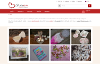 Nákupní galerie rukodělných výrobků, služeb a materiálů. Můžete si zde otevřít svůj obchod a začít prodávat nebo jen nakupovat.
Lavivasex.cz - erotické pomůcky
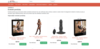 Přehled erotických pomůcek od elegantních vibrátorů, hraček pro páry až po stimulační oleje, afrodiziaka a BDSM pomůcky.
Hledej-hosting.cz - webhosting, VPS hosting
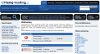 Přehled webhostingových, multihosting a VPS hosting programů s možností jejich pokročilého vyhledávání a porovnávání. Najděte si jednoduše vhodný hosting.