

26.11.2022 19:50 Country: Democratic Republic of the Congo Source: European Commission's Directorate-General for European Civil Protection and Humanitarian Aid Operations Humanitarian needs in the Democratic Republic of the Congo are among the highest in the world. People in the DRC have been facing persistent conflict and violence for decades. There are currently over 5.6 million displaced people within the country – the highest number in Africa. More than 1 million Congolese refugees live in neighbouring countries. Due to the conflict, children cannot stay in school or go back to it. Raphaële, who works for EU Civil Protection and Humanitarian Aid Operations, recently visited the South Kivu province in the DRC. Here, the EU and partners are running projects to support the construction and renovation of primary schools. Our funding also helps provide educational kits for children. Read her first-hand account. Our convoy reaches the small village of Lemera, in the South Kivu province of the DRC, after a long drive on a bumpy dirt road running along a steep mountainside. Physical access constraints and frequent clashes between local armed groups explain why remote communities in the Hauts and Moyens Plateaux of South Kivu receive few visitors. The humanitarians in charge of the MERCI project are among the exceptions. The project is funded by the EU and implemented by OXFAM Belgium and Street Child. The goal of MERCI is to make a positive impact on the lives of more than 3,000 men, women and children heavily affected by the conflict, whether they are internally displaced populations, members of host communities, or returnees. Education in emergencies We stop in front of the village’s primary school. Immediately, dozens of children gather around the cars, welcoming us with curious eyes and shy smiles. Many are wearing very simple uniforms and carrying brightly coloured backpacks: they form part of the educational kits that OXFAM and Street Child distributed to the young pupils at the start of the school year. The project, launched a few months ago, includes the construction and renovation of 20 primary schools in 10 local communities. Here, work has already started on one of the buildings: inside, the new cement floor is smooth and clean, and a large blackboard hangs on the wall. Desks are still lacking in the classroom where far too many pupils are sitting together, but it is a decisive first step towards improving the learning conditions of children. Caring for the environment A few metres away from the school buildings, we visit the nursery garden. The children have sown seeds which are already starting to grow. The small trees will later be planted around the school. South Kivu’s forests are threatened by slash-and-burn farming as well as by the intensive use of wood as fuel to fire mud bricks and cook food. The project helps to raise community awareness about the need for reforestation. Schools are the focal point of the MERCI intervention, which aims to protect vulnerable populations by creating a safer and more prosperous environment. The smiling children who surround us are the promise of a better future for this conflict-torn community. Story by Raphaële Magoni, Desk Officer DRC, EU Civil Protection and Humanitarian Aid Operations. Publication date: 18/11/2022
26.11.2022 10:52 Country: Democratic Republic of the Congo Source: Institute of Development Studies IDS Working Paper 578 Published on 25 November 2022 This Working Paper analyses the role and practices of women’s groups in relation to women’s protection in the provinces of North and South Kivu in the Democratic Republic of the Congo . Contrasting qualitative materials from communities in Congo with the literature on women’s agency, we explore the spaces, strategies, and repertoires used by women to increase their participation in community protection structures. Using case studies from North and South Kivu, including protection projects supported by ActionAid and Oxfam, we show how women’s leadership groups can constitute an empowering space and vehicle for women’s collective negotiation for protection which spans across several interrelated spheres: domestic, community, and professional, as well as legal, religious, and customary. Through our analysis of how women’s groups shape protection discourses and progressively change practices, we aim to contribute to a more nuanced understanding of what a women-led approach to protection means in practice as well as the challenges and opportunities that women face in order to expand their agency in a conflict-affected and patriarchal context. Read the full working paper on Cite this publication Maubert, C.; Allouche, J.; Hamuli, I.; Kuliumbwa Lulego, E.; Marchais, G.; Mushi Mugumo, F. and Nazneen, S. Women’s Agency and Humanitarian Protection in North and South Kivu, DRC, IDS Working Paper 578, Brighton: Institute of Development Studies, DOI: 10.19088/IDS.2022.076
25.11.2022 17:51 Countries: Burkina Faso, Cameroon, Democratic Republic of the Congo, Niger, Uganda Source: UN Office for the Coordination of Humanitarian Affairs Please refer to the attached Infographic. DR CONGO CALLS FOR URGENT RESPONSE IN NORTHKIVU The Minister of Social Affairs, Humanitarian Actions and National Solidarity M. Modeste Mutinga, and the Humanitarian Coordinator M. Bruno Lemarquis, accompanied by representatives of humanitarian agencies completed a mission to North-Kivu province, in the east, to examine the humanitarian consequences of the resumption of clashes on 20 October between the between the Congolese Army and the M23 armed group, and to support the ongoing emergency relief operations. Thousands of families need aid in shelter, protection, household items, food aid, health care, drinking water and sanitation facilities. Humanitarian agencies estimate that approximately 280,000 people have been displaced since the clashes last March, of whom more than 128,000 are in Nyiragongo territory in North Kivu. Most displaced people are living in schools, hospitals, churches and makeshift sites, while thousands more are living with host families. Over 7,000 people have taken refuge in Uganda. CAMEROON CHOLERA KILLS 13 PERSONS IN THE FAR NORTH REGION The Far North region continues to be affected by the cholera epidemic with 395 cases notified and 17 deaths as of 13 November, with six health districts affected, including the Mada district as the most affected. Humanitarian agencies continue to support the Ministry of Public Health to respond to the epidemic. However, limited resources, flooding, and displacements due to insecurity by non-state armed groups are aggravating the spread of the epidemic in the region. NIGER HUMANITARIANS REPORT THE PRESENCE OF REFUGEES FROM BENIN IN THE SOUTH On 10 November, humanitarian organizations and the Ministry of Humanitarian Action undertook a visit to the southern Dosso region to confer with local authorities and partners. The mission reported that about 640 refugees who fled attacks by non-state armed groups in Benin were living in the rural District of Falmey, along with internally displaced people from the Dan Kasali District and the Tillabéri region. Moreover, heavy rainfall and floods have impacted about 70,000 people across the area. The mission called for new coordination and information sharing mechanisms and to increasingly integrate people’s feedback and aspirations into aid provision interventions and partners’ activities. BURKINA FASO ARMED GROUP ATTACK ON A DISPLACMENT SITE IN THE NORTH On 15 November, an attack by an armed group on the Youba displacement site in the north ransacked the health centre and primary school cantine. Some food supplies were stolen, and others set ablaze. This is the second attack on the site in less than a week. On 10 November, armed groups had attacked the same site, setting a temporary school ablaze and forcing internally displaced persons to displace again to Ouahigouya. The Youba displacement is in the northeast of Ouahigouya, in the north of the country.
25.11.2022 17:51 Country: Democratic Republic of the Congo Source: Médecins Sans Frontières Friday, November 25, 2022 — In 2002, Médecins Sans Frontières teams opened the first outpatient treatment centre offering free care to people living with HIV in Kinshasa, the capital of the Democratic Republic of Congo . Twenty years later, while great progress has been achieved in the country, major gaps remain in testing and treatment, causing thousands of preventable deaths each year. When the doors of MSF's treatment centre opened in May 2002, the situation was critical: more than one million men, women and children were living with HIV in the DRC, but antiretroviral treatment was scarce and unaffordable in the country. By the early 2000s, the virus was killing between 50,000 and 200,000 people each year, according to UNAIDS. "For many, being infected with HIV was just a death sentence," says Dr. Maria Mashako, MSF's medical coordinator in the DRC. "The cost of antiretroviral treatment made it just inaccessible to most patients. Even MSF, in the early months of the centre, did not have ARVs. Our team could only treat symptoms and opportunistic infections. It was very hard.” Clarisse Mawika, 60, was tested positive in 1999. She remembers these dark years all too well. "I don't like to think back about those times," she says. "When I got the result of my blood test, I thought 'prepare your funeral'. Fortunately, my family chipped in to send me drugs from Europe. But at some point, they couldn't afford to pay anymore. I had to stop treatment for several months. My condition started to deteriorate. That's when someone I knew told me about MSF.” MSF driving progress against HIV/AIDS Being the first health facility to offer free ARVs to patients in Kinshasa, MSF's treatment centre was soon overwhelmed by the large number of people in need of treatment. "It was just unbearable," recalls Dr. Mashako, still a young doctor in the facility the mid-2000s. "Consultations started at dawn and ended at night. There were so many patients..." To increase access to care and treatment, MSF started supporting other health centres and hospitals in the provision of free screening tests, access to treatment and care. In Kinshasa alone, around 30 health facilities benefitted from this MSF support over the past two decades. Our teams also set up a pilot model of care that allowed nurses to prescribe treatment and follow up HIV-positive patients. This was a crucial initiative as only a handful of doctors per province were allowed to do so back then. In 20 years, this support resulted in the training of countless health workers, and nearly 19,000 people receiving free ARV treatment in Kinshasa alone. "This medical support was of course essential, but not enough," says Dr. Mashako. "We had to limit congestion in health facilities while bringing treatment closer to the patients. That is why we worked with the national network of patients’ associations to launch ARV distribution posts, directly managed by patients.” Clarisse was one of the driving forces behind the launch of those community-based distribution posts, called “PODI” in the DRC. "When we launched the first two posts in Kinshasa in 2010, there were less than 20 patients getting their treatment from it," she recalls. "Today, there are 17 PODIs in eight provinces, and more than 10,000 patients go there to get their medicines." The approach proved so successful it was eventually integrated into the national HIV/AIDS plan. Advanced HIV as a mirror of massive gaps Great progress has been achieved over the years in the fight against HIV/AIDS in the DRC, and the current situation is just incomparable to that of 2002: access to treatment has been greatly expanded and over the last 10 years the number of new infections has dropped by half. Yet, MSF's work in the country has been constantly carried out against a backdrop of insufficient national and international resources to win the fight against HIV/AIDS and ensure access to treatment and care for all. "When we set up an inpatient unit dedicated the provision of care for advanced HIV in 2008, we didn't think that it would still be full of patients more than a decade later,” says Dr. Mashako. “Over the years, we have doubled its initial bed capacity but we still have to regularly put up tents to accommodate patients. This reflects the immense challenges that remain in the fight against HIV/AIDS in the DRC.” Since its opening, more than 21,000 people have been admitted in MSF’s advanced HIV care unit in Kinshasa. “In 2021, UNAIDS still estimated that one-fifth of the 540,000 people living with HIV in the DRC did not have access to treatment and that 14,000 people had died of HIV in the country,” says Dr. Mashako “As a doctor, I am appalled that so many lives are still being lost for nothing," Boosting efforts is urgent and vital The DRC depends almost exclusively on international donors in the fight against HIV/AIDS. However, their support is insufficient given the scale of the challenges. “This is a reality that we have been denouncing for years," says Dr. Mashako. “This lack of funding is largely responsible for the lack of free voluntary testing, the lack of training for healthcare providers, chronic shortages of medicines or massive disparities in HIV services between provinces.” According to the Congolese national AIDS control programme, only three provinces have adequate equipment to measure patients’ viral load, which is key for assessing the evolution of the infection and the effectiveness of treatment. Setbacks in the fight against HIV/AIDS have even been confirmed in recent years. For instance, activities aimed at reducing mother-to-child transmission of HIV – by testing pregnant women and putting them on treatment – are on the decline. A quarter of children born to HIV-positive mothers did not have access to paediatric prophylaxis at birth, partly because of paediatric ARV shortages. And two-thirds of children living with HIV are not on ARV treatment. "HIV will not be defeated in the DRC if stakeholders don’t boost up efforts," says Dr. Mashako. "If I only had one wish, it would be that MSF would not be here in 20 years' time to treat so many patients with HIV." In 2022, MSF is supporting the Ministry of Health in the provision of HIV/AIDS care and services in Kinshasa and in six provinces of the DRC . This support takes the form of direct patient care, training for healthcare providers and the provision of essential medicines and medical supplies.
25.11.2022 17:51 Country: Democratic Republic of the Congo Source: World Health Organization Kinshasa – More than 14 African countries have reported cholera cases since January 2022. In the Democratic Republic of the Congo, this acute diarrhoeal disease is endemic in several provinces. Since the beginning of the year, more than 12 300 suspected cases have been reported, including 222 deaths, in 17 of the country's 26 provinces. Dr Aaron Aruna, Director of Epidemiological Surveillance at the Ministry of Public Health, Hygiene and Prevention, discusses the challenges and the efforts being made to tackle cholera. Why is it so difficult to control a cholera outbreak? Controlling a cholera outbreak is difficult because it takes huge amounts of resources to launch a multisectoral response and conduct meaningful epidemiological research. Outbreaks do not all have the same dynamic, nor the same profile. Each outbreak requires targeted measures. Take for instance the epidemic in Kalemie, in Tanganyika Province: most of the cases there are suspected cases. We need laboratories that can confirm cases, especially when an outbreak occurs. Test results can provide information on an outbreak of cases and let us know when it’s time to trigger an appropriate response to minimize or eliminate cases early during the rainy season before the outbreak spreads. Unfortunately, it is only when we start recording deaths that a response is triggered; we do not see the epidemic coming. A late reaction lets the epidemic take hold. It is better to act when there are still just a few cases to give ourselves every chance of halting it. What role does vaccination play in the cholera response? The Democratic Republic of the Congo has been using vaccines for at least 10 years, but we deploy the vaccine only under certain conditions. First, vaccination is required when there is massive population movement from a high-risk area to a cholera-free area. Second, when the epidemic is spreading, we can organize preventive vaccination in areas that are not yet affected. Third, vaccination campaigns should be organized during periods when there are few cases. When we conduct studies, we find that cholera persists even during periods of low infection. Vaccinating at that time would protect the population and prevent the spread of the disease. Vaccination is effective only if carried out on a large scale. If you vaccinate only the population in an affected health area while that population is mobile, you will not have the desired result. This is especially true when, for example, an epidemic occurs in a large city like Goma. For now, with insufficient vaccines available for a country of this size, we need to target the affected health areas. The vaccine is therefore a complementary tool to other actions that allow us to contain and eliminate cholera. What are the other tools to fight the disease? It starts with surveillance, case investigation, strengthening clinical care and improving sanitation and access to clean water. Communication with the population is also essential. Together, these tools make it possible to rapidly control cholera outbreaks. The public’s attitude is very different if an epidemic occurs in an area where the disease is recurrent as compared with an area where cholera is unknown. In non-endemic areas, people tend to be more afraid and react faster. At the end of the day, health systems must be strengthened at the outbreak level. What lessons learned from previous outbreaks do you apply today? Today, our responses to cholera outbreaks are community-based responses. The response must be carried out within communities, at the household level. That’s where we must raise awareness of the disease and its prevention, explain what to do when there is a case, how to refer this case to treatment centres. This must be done in conjunction with the distribution of soap, water treatment products and medicines, while also working with water distribution companies to improve water quality. There are also actions to be taken around sanitation, waste management and the construction of latrines. This multisectoral approach at the household level empowers communities to control and eliminate cholera. For Additional Information or to Request Interviews, Please contact: Eugene Kabambi Emergency Communications Officer Tel : +243 81 715 1697 Office : +47 241 39 027 Email: kabambie@who.int Vincent Defait Communication Officer Regional Office for Africa Email: defaitv@who.int
25.11.2022 17:51 Country: Democratic Republic of the Congo Source: World Food Programme KINSHASA – Le Programme alimentaire mondial des Nations unies a apporté cette année une assistance en espèces à 1,2 million de personnes vulnérables en République démocratique du Congo pour un montant total de 17,5 millions de dollars, grâce notamment à une contribution de l'Union européenne . Cette contribution reçue par l'intermédiaire du service d'aide humanitaire de l'Union européenne , a permis au PAM de fournir une assistance vitale aux populations de l'est de la RDC, où l'intensification de la violence aggrave l'insécurité alimentaire et détruit les moyens de subsistance des personnes. Le conflit dans l'est du pays reste le principal facteur de l'insécurité alimentaire de la plus grande crise de déplacement en Afrique avec 5,7 millions de personnes déplacées. "De l'argent pour les familles signifie qu'elles peuvent se permettre d'acheter de la nourriture et des médicaments - c'est essentiel lorsque vous êtes déracinés par le conflit, et que vous avez perdu vos maisons et vos revenus", a déclaré Peter Musoko, directeur pays du PAM en RDC. "Nous devons continuer à être en mesure de répondre à l'échelle de la crise et veiller à ce que les communautés touchées aient un accès continu à l'aide alimentaire critique dont elles ont besoin." Alors que la détérioration de la situation sécuritaire limite l'accès du PAM aux personnes les plus dans le besoin, l'argent liquide est l'un des moyens les plus efficaces pour le PAM d'aider les familles déplacées à lutter contre la faim, la malnutrition et à améliorer leur sécurité alimentaire. "L'UE finance depuis de nombreuses années le PAM dans ses efforts de lutte contre l'insécurité alimentaire dans les zones affectées par le conflit dans l'est de la RDC", déclare Johan Heffinck, chef de bureau de l'aide humanitaire de l'UE en RDC. "Ce partenariat stratégique permet de répondre à nos priorités humanitaires visant à aider les personnes déplacées internes aussi rapidement que possible. Cela rend notre partenariat très important." Là où les marchés et les secteurs financiers fonctionnent, mettre l'argent directement dans les mains des gens les aide à acheter ce dont ils ont le plus besoin. Cela leur donne plus de choix et d'indépendance. La dernière analyse du PAM montre que grâce à l'assistance reçue, plus de 10 pour cent des personnes assistées en Ituri, au Nord-Kivu, au Sud-Kivu, au Tanganyika et au Haut-Katanga ont un score acceptable de consommation alimentaire, ce qui représente une augmentation de plus de 4 pour cent par rapport à 2021. "Entre l'assistance alimentaire en nature et en espèces, j'ai préféré l'assistance en espèces car, ayant tout perdu, nous sommes en mesure de mieux prioriser les besoins", a déclaré Emedi Kisimba, qui a bénéficié de l'assistance en espèces du PAM en 2021. "J'ai investi mon argent dans le bétail, que je vends pour payer les frais de scolarité de mes trois petits frères qui sont à l’école secondaire. Je vends également des chèvres pour payer les soins de santé de mes enfants et pour les dépenses alimentaires." Selon la du Cadre intégré de la classification de la sécurité alimentaire , plus de 26 millions de personnes, soit un quart de la population, sont confrontées à une insécurité alimentaire aiguë . Le maintien d'une assistance alimentaire régulière est vital, surtout pendant la période de soudure. Même lorsque la nourriture est disponible, la hausse des prix, due en partie à l'augmentation des coûts du carburant et du transport, ne permet pas aux ménages vulnérables d’avoir les moyens de se procurer une nourriture nutritive suffisante et appropriée. Le soutien continu de donateurs tels que l'Union européenne constitue une bouée de sauvetage pour les familles de la RDC confrontées à une insécurité accrue et à une détérioration des conditions socio-économiques. Malgré l'environnement opérationnel difficile, le PAM prévoit d'atteindre un nombre record de 8,6 millions de personnes en RDC cette année - plus de deux millions de plus qu’en 2021 et a besoin de 116 millions de dollars supplémentaires pour soutenir les programmes essentiels pour les six prochains mois. # # # Le Programme alimentaire mondial des Nations Unies est le plus grand organisme humanitaire au monde, il sauve des vies en situations d'urgence et utilise l'assistance alimentaire pour ouvrir une voie vers la paix, la stabilité et la prospérité au profit de ceux qui se relèvent d'un conflit ou d'une catastrophe ou subissent les effets du changement climatique. Suivez-nous sur Twitter @WFP_DRC @WFP_FR
25.11.2022 17:51 Country: Democratic Republic of the Congo Source: World Food Programme KINSHASA – The United Nations World Food Programme has reached some 1.2 million vulnerable people with US$ 17.5 million cash assistance in the Democratic Republic of the Congo this year thanks in part to a contribution from the European Union . The contribution, which was received through the European Union’s Humanitarian Aid department , has allowed WFP to provide life-saving assistance to people in eastern DRC, where intensifying violence is worsening food insecurity and decimating people’s livelihoods. Conflict in the east of the country remains the main driver of food insecurity and the source of Africa's largest displacement crisis with 5.7 million people displaced. “Money for families means they can afford food and medicines – this is critical when you are uprooted by conflict, and you have lost your homes and income,’’ said Peter Musoko, WFP’s Country Director in DRC. “We need to continue to be able to respond at scale and ensure that affected communities have continued access to the critical food assistance they require.’’ While the deteriorating security situation limits WFP's access to those most in need, cash is one of the most effective ways for WFP to help displaced families fight hunger, malnutrition and improve their food security. “The EU has been funding WFP for many years in its efforts to address food insecurity in areas affected by conflict in the east of DRC,” says Johan Heffinck, EU Humanitarian Aid’s Head of Office in DRC. “This strategic partnership helps address our humanitarian priorities to assist internally displaced persons as quickly as possible. This makes our partnership very important.” Where markets and financial sectors are functioning, putting money directly into people’s hands helps them to buy what they need the most. It gives them greater choice and independence. Latest WFP analysis shows that over 10 percent of the assisted people have an acceptable food consumption score, representing an increase of over 4 percent compared to 2021 in Ituri, North Kivu, South Kivu, Tanganyika, and Haut Katanga as a result of the support. "Between in-kind food assistance and cash assistance, I preferred cash because, having lost everything, we are able to better prioritize needs,” said Emedi Kisimba, who received WFP’s cash assistance in 2021. “I invested my money in livestock, which I sell to pay school fees for my three little brothers in secondary school. I also sell goats to pay for my children's health care and for food expenses." According to the latest IPC , over 26 million people, or a quarter of the population, are facing acute food insecurity . Maintaining regular food assistance is vital, especially during the lean season. Even when food is available, higher prices, triggered partly by rising fuel and transport costs, mean that vulnerable households cannot afford sufficient and proper nutritious food. Continued support from donors such as the European Union is providing a lifeline for families in the DRC facing increased insecurity and deteriorating socio-economic conditions. Despite the challenging operating environment, WFP plans to reach a record 8.6 million people in DRC this year — over two million more than it supported in 2021 and needs an additional US$116 million to support critical programmes for the next six months. # # # The United Nations World Food Programme is the world’s largest humanitarian organization saving lives in emergencies and using food assistance to build a pathway to peace, stability and prosperity for people recovering from conflict, disasters, and the impact of climate change. CONTACT Shelley Thakral, WFP/Kinshasa, Mob. +243 81 700 6744 Claude Kalinga, WFP/Kinshasa, Mob. +243 81 700 6714 Tomson Phiri, WFP/Jophannesburg, Mob. +27 81 026 3792 Jordan Cox, WFP/Brussels, Mob. +39 3389957376
25.11.2022 09:30 Country: Democratic Republic of the Congo Source: World Food Programme Please refer to the attached file. HUMANITARIAN NEEDS The humanitarian situation has deteriorated sharply in Rutshuru, North Kivu, due to the resumption of hostilities between the FARDC and the M23 rebellion. 188,000 people have been displaced to new locations in Nyiragongo, Rutshuru and Lubero since 20 October. These territories already hosted vulnerable victims of the volcanic eruption in 2021 and 49,000 people displaced by M23 clashes since March 2022. Arriving populations are deprived of almost everything and face multiple needs, including access to food. The influx of people is already causing food price hikes in markets, destabilising the socio-economic situation for the host population alike. Emergency interventions can curb the market deterioration and safeguard the living conditions of the vulnerable. The now 237,000 people displaced by M23 clashes since March 2022 are in need of humanitarian assistance. Additionally, 137,000 people have forcibly returned to their original homes in Rutshuru under extremely vulnerable conditions. WORLD FOOD PROGRAMME RESPONSE WFP has been responding to the crisis by distributing food commodities to people fleeing the conflict. Since early November, WFP has distributed food assistance to meet the immediate food needs of 70,000 people in Kanyaruchinya and Munigi, Nyiragongo territory. This number rises every day as distributions are ongoing. WFP is providing emergency food and cash assistance as well as high-energy biscuits. WFP is also screening young children and nursing mothers for malnutrition and admitting suspected cases to health centres where Moderate Acute Malnutrition treatments are available thanks to WFP’s support. WFP is currently working on a scaled-up response plan. It plans to support 250,000 people with in-kind food and cash assistance for an initial period of six months. This includes 30% of the host community. Additionally, WFP will strengthen its nutrition programmes at sites for internally displaced people to prevent and treat malnutrition in young children and nursing mothers. WFP requires USD 43.5 million in the next six months to do this.
25.11.2022 09:30 Countries: Democratic Republic of the Congo, South Sudan Source: World Food Programme Please refer to the attached file. Faits marquants Violence dans l'est de la RDC : Les partenaires humanitaires estiment que plus de 262 000 personnes ont été déplacées depuis le début des combats en mars, dont plus de 128 000 dans le territoire de Nyiragongo, dans la province du Nord-Kivu. Le PAM et ses partenaires se concentrent sur l'aide alimentaire d'urgence pour sauver des vies et ont jusqu'à présent atteint plus de 91 000 personnes à Kanyaruchinya et Munigi dans le Nyiragongo. Le PAM prévoit d'intensifier sa réponse et cible 250 000 personnes avec une aide alimentaire en nature et en espèces pour une période initiale de six mois, si les ressources le permettent. Mise à jour de la situation Conflit à l'Est : Au Nord-Kivu, la situation humanitaire s'est fortement détériorée dans les zones affectées par la reprise des hostilités entre les forces armées de la RDC et le groupe armé non-étatique M23. Plus de 7 000 personnes déplacées ont trouvé refuge en Ouganda. Défis liés à la chaîne d'approvisionnement alimentaire : Le PAM sera bientôt confronté à de réelles pénuries en ce qui concerne l'aide alimentaire générale , la prévention et le traitement de la malnutrition. Les pénuries en produits de base empêcheront le PAM de mettre en œuvre ses opérations à pleine échelle déjà au cours du premier trimestre de 2023. Le PAM a donc un besoin urgent de fonds pour ces trois activités, d'autant plus que les populations déplacées augmentent suite à la situation actuelle dans l'est du pays. Rapport M-Kengela : Au Nord-Kivu, le coût d'un panier alimentaire a augmenté de 19 % en septembre 2022 par rapport au même mois de l'année précédente. Les effets des affrontements entre les forces armées de la RDC et le M23 dans le territoire de Rutshuru se font sentir sur les marchés de la province, provoquant une forte augmentation des prix des produits de première nécessité.
25.11.2022 09:30 Countries: Democratic Republic of the Congo, South Sudan Source: World Food Programme Please refer to the attached file. Highlights Violence in eastern DRC: Humanitarian partners estimate that since the fighting began in March over 262,000 people have been displaced, of whom more than 128,000 are in Nyiragongo territory, North Kivu province. WFP and its partners are focusing on emergency lifesaving food assistance and have so far reached more than 91,000 people in Kanyaruchinya and Munigi in Nyiragongo. WFP plans to scale up its response and is targeting 250,000 people with inkind food and cash assistance for an initial six months, resources permitting. Situation Update Conflict in the east: In North Kivu, the humanitarian situation has deteriorated sharply in the areas affected by the resumption of hostilities between the DRC armed forces and the non-state armed group M23. Over 7,000 displaced people have taken refuge in Uganda. Pipeline Challenges: WFP will soon face real shortages when it comes to General Food Assistance , and prevention and treatment of malnutrition. Shortages of commodities will prevent WFP from implementing its operations at full scale during the first quarter of 2023 already. Therefore, WFP urgently needs funds for these three activities, especially since displaced populations are increasing with the current tense situation in the east. : In North Kivu, the cost of the food basket in September 2022 had increased by 19 percent compared to the same month a year ago. The effects of the clashes between the DRC armed forces and M23 in Rutshuru territory are being felt in the province's markets causing a sharp increase in the prices of essential commodities.
25.11.2022 09:30 Country: Democratic Republic of the Congo Source: World Food Programme Please refer to the attached file. HUMANITARIAN NEEDS The humanitarian situation remains alarming in North Kivu as the violence between the Congolese armed forces and the March 23 Movement rebellion persists and is moving closer to Goma. 262,000 people have been forcibly displaced as a result of the M23 resurgence since March 2022. Most are sheltering in schools, hospitals, churches, makeshift sites and with host communities in Nyiragongo territory. Many more are in Rutshuru and Lubero territories. Masisi territory, already host to insecurity, is emerging as another site for a large number of people seeking safety, as the violence continues to spread. Families arriving at these sites are deprived of almost everything and face multiple needs, including food. The influx of people is causing food price hikes in markets, destabilising the socio-economic situation for the host population alike. Emergency interventions can curb the market deterioration and safeguard the living conditions of the vulnerable. WORLD FOOD PROGRAMME RESPONSE WFP has been responding to the crisis by distributing emergency food, cash and high energy biscuits to people fleeing the conflict. Since early November, WFP has distributed assistance to meet the urgent food needs of 91,000 people in Kanyaruchinya and Munigi, in Nyiragongo territory. This number rises daily as distributions are ongoing. WFP is launching operations in Masisi, to respond to the latest needs of people fleeing the intensified and expanding conflict. WFP is also launching distributions for people in need in Lubero and Mabalako. The insecurity is preventing access for WFP and partners to Rutshuru itself at present. WFP is screening young children and nursing mothers for malnutrition and admitting high numbers of suspected cases to health centres where WFP’s treatments are available. WFP is finalising a scaled-up response plan. It plans to support 250,000 people with inkind food and cash assistance for an initial period of six months. This includes 30% of the host community. WFP will also run its nutrition programmes to prevent and treat malnutrition in young children and nursing mothers. WFP requires USD 50.7 million in the next six months to do this.
25.11.2022 09:30 Countries: Democratic Republic of the Congo, Jordan, World Source: Médecins Sans Frontières Avec l'application Antibiogo, la Fondation MSF agit et propose une réponse concrète à l’urgence de santé mondiale que représente l'antibiorésistance, utilisable dès maintenant dans les pays à revenu faible ou intermédiaire. Selon l’OMS, la résistance aux antimicrobiens est l’une des menaces de santé publique les plus urgentes de notre époque. Les autorités sanitaires estiment que plus de la moitié des antibiotiques sont utilisés de manière inadéquate et essentiellement dans de nombreux pays à revenu faible ou intermédiaire. Dans ces pays, la RAM ne peut pas être mesurée, par manque de moyens techniques et humains pour la détecter et la surveiller. Il paraît donc urgent de trouver des réponses rapidement déployables afin de répondre à l’urgence sanitaire et ainsi freiner la propagation de la RAM. La Fondation MSF propose Antibiogo, le premier dispositif médical in vitro marqué CE, pensé, développé et testé pour et avec les pays à ressources limitées. Cet outil, application de lecture, permet d’interpréter les antibiogrammes et de donner une réponse pratique et sûre afin de sécuriser la prescription d’antibiotiques. « Grâce à Antibiogo, n’importe quel technicien de laboratoire en microbiologie, partout dans le monde, va pouvoir lire et interpréter, directement sur un téléphone, un antibiogramme et savoir quel est le profil de résistance des bactéries responsables de l’infection des patients » explique le Docteur Nada Malou, responsable du projet Antibiogo pour la Fondation MSF. La lutte contre la résistance aux antibiotiques repose sur une réponse multidisciplinaire avec comme pilier essentiel le bon diagnostic Avant d’initier un traitement antibiotique, il est nécessaire d’identifier avec certitude la bactérie pathogène, et de tester sa sensibilité aux antibiotiques. Dans ce cas, il convient d’effectuer un prélèvement bactériologique sur le patient, et de réaliser un antibiogramme. Dans les pays riches, la prescription d’antibiotiques est facilitée par l’utilisation d’automates pour la lecture et l’interprétation des antibiogrammes, et par l’expertise de microbiologistes. Mais dans les pays à ressources limitées, dépourvus de ces équipements onéreux, de microbiologistes cliniques, et de formations à l’interprétation des tests, l’identification de l’antibiorésistance est bien plus compliquée, voire souvent absente. En conséquence, les antibiogrammes sont souvent mal interprétés et ce constat a été très saillant dans les 70 pays dans lesquels MSF est présente. On observe fréquemment des patients arriver dans les hôpitaux avec des infections bactériennes et qui ne répondent pas aux traitements antibiotiques. Pour aider les médecins, dans les pays à revenu faible ou intermédiaire, à prescrire les antibiotiques les plus efficaces à leurs patients, la Fondation MSF a créé un outil capable d'interpréter les photos d’antibiogrammes. Une interprétation sûre et efficace des antibiogramme grâce à une application révolutionnaire : Antibiogo Antibiogo est un outil de diagnostic permettant aux techniciens de laboratoires non-experts de mesurer et interpréter des antibiogrammes. Il est basé sur le traitement d'images, une technologie d'intelligence artificielle et un système expert qui simule le savoir-faire d'un spécialiste. L’application a été développée par les équipes de la Fondation MSF, accompagnées par une douzaine de développeurs de Google.org qui les ont soutenus à plein temps et bénévolement pendant 12 mois et elle a bénéficié d’une licence d’exploitation logiciel d’une entreprise experte en microbiologie i2a. En pratique, l’application permet aux techniciens de laboratoire de mesurer les diamètres d’inhibition qu’on retrouve sur les antibiogrammes, puis à en interpréter les résultats, sans forcément avoir une expertise en microbiologie. En situation, les résultats montrent un très haut niveau de concordance, allant de 90 à 98 % en fonction des bactéries, lorsqu’ils sont comparés avec l’interprétation faite par des microbiologistes qualifiés. Les techniciens de laboratoire non experts exerçant dans les pays à revenu faible ou intermédiaire ont désormais la possibilité de mesurer et d’interpréter les antibiogrammes pour fournir des résultats précis. Antibiogo, un espoir de taille pour ralentir l’antibiorésistance dans les pays à ressources limitées Antibiogo est le premier dispositif médical in vitro marqué CE, conçu par la Fondation MSF. Cet outil, qui se formalise sous une application gratuite et téléchargeable, apporte une réponse concrète afin de ralentir la RAM dans tous les pays en facilitant l'accès à un diagnostic bactériologique de qualité. Les résultats peuvent également être utilisés à des fins de surveillance et de mise à jour des traitements empiriques basés sur l'étiologie réelle. L’application Antibiogo est déjà utilisée dans plusieurs laboratoires de MSF, notamment en Jordanie et en RDC, et le sera d'ici décembre au Mali, en République Centrafricaine et au Yémen et a pour vocation d’être déployée plus largement. A terme, l’application deviendra un outil destiné aux professionnels de santé dans l’ensemble des pays à ressources limitées. Chiffres clé 1,27 MILLIONS : c’est le nombre de décès en 2019 dans le monde liés à l’antibiorésistance 10 MILLIONS : c’est le nombre de décès par an dans le monde à partir de 2050, si rien ne change Plus de la moitié des antibiotiques sont utilisés de manière inappropriée 400 ANS : c’est le nombre d’années qu’il faudrait pour qu'en Afrique subsaharienne, la proportion de pathologistes officiant au sein de la population ne soit égale à celle que l'on retrouve aujourd'hui aux Etats-Unis ou au Royaume-Uni. Pour plus d’info sur Antibiogo :
24.11.2022 15:21 Country: Democratic Republic of the Congo Source: UN Office for the Coordination of Humanitarian Affairs Please refer to the attached Infographic. Selon les acteurs étatiques et humanitaires, environ 340 000 personnes ont été déplacées depuis que les combats ont éclaté dans le territoire de Rutshuru en mars, dont plus de la moitié sont des femmes. Au moins 49% de ces personnes déplacées vivent dans des familles d'accueil, tandis que des milliers d'autres utilisent des écoles comme abris, et occupent des hôpitaux, des églises et d'autres sites improvisés. Les partenaires humanitaires estiment qu'au moins 679 000 civils auront besoin d'aide en raison des combats, dont 315 000 ont été ciblés. Les agences des Nations Unies, les services étatiques et les partenaires humanitaires travaillent pour assister les personnes touchées par la crise ; au moins 83 000 personnes ont reçu une aide humanitaire. Cependant, les besoins humanitaires ne cessent d'augmenter à la vue de la poursuite des combats ; les abris, l’alimentation, les articles ménagers essentiels, l'eau, la protection et les soins de santé en sont les plus urgents.
24.11.2022 15:21 Country: Democratic Republic of the Congo Source: UN Office for the Coordination of Humanitarian Affairs Please refer to the attached Infographic. According to state and humanitarian actors, about 340,000 people have been displaced since fighting broke out in Rutshuru territory in March, more than half of whom are women. At least 49% of these displaced people are living with host families, while thousands more are occupying schools, hospitals, churches and other makeshift sites. It is estimated that least 679,000 civilians will need assistance as a result of the fighting, some 315,000 of whom have been targeted. United Nations agencies, state and humanitarian partners are working to help people affected by the crisis; at least 83,000 people have been reached with humanitarian assistance. However humanitarian needs keep increasing as fighting continues; shelter, food and non-food items, water, protection and health care are most urgent.
24.11.2022 15:21 Countries: Democratic Republic of the Congo, Uganda Source: UN Office for the Coordination of Humanitarian Affairs Please refer to the attached Infographic. Au moins 340 000 personnes ont été déplacées depuis que les combats entre l’armée congolaise et le Mouvement du 23 mars ont éclaté dans le territoire de Rutshuru en mars ; plus de 7 000 autres ont trouvé refuge en Ouganda. La majorité de ces personnes déplacées se trouvent dans le territoire de Nyiragongo , dont plus de 88% vivent dans des centres collectifs et des sites improvisés, tandis que le reste est hébergé dans des familles d'accueil. Plus de 137 000 personnes déplacées ont été contraintes de retourner dans leurs localités d'origine dans les zones de santé de Rutshuru et Rwanguba, lorsque les combats se sont intensifiés en octobre. Les mouvements de population restent dynamiques et évoluent selon le contexte sécuritaire.
Srdcetvor.cz - handmade
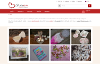 Nákupní galerie rukodělných výrobků, služeb a materiálů. Můžete si zde otevřít svůj obchod a začít prodávat nebo jen nakupovat.
Lavivasex.cz - erotické pomůcky
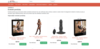 Přehled erotických pomůcek od elegantních vibrátorů, hraček pro páry až po stimulační oleje, afrodiziaka a BDSM pomůcky.
Hledej-hosting.cz - webhosting, VPS hosting
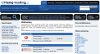 Přehled webhostingových, multihosting a VPS hosting programů s možností jejich pokročilého vyhledávání a porovnávání. Najděte si jednoduše vhodný hosting.