

02.11.2022 07:00 Countries: Democratic Republic of the Congo, Madagascar, Mozambique, Nigeria Source: British Medical Journal Yara Alonso, Wade Lusengi, Manu F Manun’Ebo, Aimée M Rasoamananjaranahary, Noroharifetra Madison Rivontsoa, Estêvão Mucavele, Neusa Torres, Charfudin Sacoor, Hope Okebalama, Ugo James Agbor, Ogonna Nwankwo, Martin Meremikwu, Elaine Roman, Franco Pagnoni, Clara Menéndez, Khátia Munguambe, Cristina Enguita-Fernàndez Abstract Introduction Intermittent preventive treatment in pregnancy with sulphadoxine pyrimethamine is a key malaria prevention strategy in sub-Saharan African countries. We conducted an anthropological study as part of a project aiming to evaluate a community-based approach to the delivery of IPTp through community health workers in four countries , to understand the social context in order to identify key factors that could influence C-IPTp acceptability. Methods A total of 796 in-depth interviews and 265 focus group discussions were undertaken between 2018 and 2021 in the four countries with pregnant women, women of reproductive age, traditional and facility-based healthcare providers, community leaders, and relatives of pregnant women. These were combined with direct observations including both community-based and facility-based IPTp delivery. Grounded theory guided the overall study design and data collection, and data were analysed following a combination of content and thematic analysis. Results A series of key factors were found to influence acceptability, delivery and uptake of C-IPTp in project countries. Cross-cutting findings include the alignment of the strategy with existing social norms surrounding pregnancy and maternal health-seeking practices, the active involvement of influential and trusted actors in implementation activities, existing and sustained trust in CHWs, the influence of husbands and other relatives in pregnant women’s care-seeking decision-making, the working conditions of CHWs, pregnant women’s perceptions of SP for IPTp and persistent barriers to facility-based antenatal care access. Conclusions The findings provide evidence on the reported acceptability of C-IPTp among a wide range of actors, as well as the barriers and facilitators for delivery and uptake of the intervention. Overall, C-IPTp was accepted by the targeted communities, supporting the public health value of community-based interventions, although the barriers identified should be examined if large-scale implementation of the intervention is considered.
02.11.2022 07:00 Country: Democratic Republic of the Congo Source: Famine Early Warning System Network Please refer to the attached file. Le Réseau de systèmes d’alerte précoce contre la famine surveille les tendances des prix des aliments de base dans les pays vulnérables à l'insécurité alimentaire. Pour chaque pays et chaque région couvert par FEWS NET, le Bulletin des prix fournit un ensemble de graphiques indiquant les prix mensuels de l’année commerciale en cours pour certains centres urbains, et permettant à l’utilisateur de comparer les tendances actuelles à la fois aux Le maïs et le manioc constituent les denrées de base pour la majorité des congolais étant donné leurs usages dans la préparation de la pâte appelée foufou. La production locale du maïs et celle du manioc demeure inférieure aux besoins de consommation locale, ce qui explique la grande importation de la farine de maïs pour combler le déficit. Le riz vient en troisième position en termes d’importance dans l’alimentation des ménages et est plus consommé dans les grandes villes. Le haricot est généralement utilisé comme aliment d’accompagnement et se mange tant dans les milieux urbains que ruraux. L’huile de palme est utilisée dans la préparation des aliments, elle est plus consommée par les ménages pauvres. Le maïs, le manioc, le riz et le haricot sont vendus sur presque tous les grands marchés des provinces de la partie Est du pays. Le prix de carburant , à laquelle s’ajoute l’état des infrastructures routières qui relient les zones rurales de production aux grands marchés de consommation se complètent à d’autres facteurs multiples qui peuvent influencer les prix des denrées dans l’Est du pays
01.11.2022 22:41 Country: Democratic Republic of the Congo Source: UN Office of the High Commissioner for Human Rights GENÈVE - Le Haut-Commissaire des Nations Unies aux droits de l'homme, Volker Türk, a appelé aujourd'hui à une désescalade urgente en République démocratique du Congo, où plus d'une dizaine de civils ont été tués, au moins 40 autres blessés et plus de 90 000 déplacés lors de la reprise des combats entre les forces armées congolaises et le groupe armé du Mouvement du 23 mars . "La situation sécuritaire dans l'est de la République démocratique du Congo se détériore rapidement et menace de provoquer une catastrophe en matière de droits de l'homme", a déclaré le haut responsable des droits de l'homme des Nations unies. "J'appelle à la désescalade et à ce que toutes les parties choisissent sans équivoque la paix à travers le dialogue. De nouveaux combats ne feront qu'engendrer plus de douleur et de souffrance pour davantage de personnes." "J'exhorte toutes les parties à protéger les civils conformément au droit international des droits de l'homme et au droit international humanitaire, notamment en facilitant l’accès à l’assistance humanitaire sans entrave à tous ceux qui en ont besoin, et en permettant aux civils de sortir en toute sécurité des zones touchées par les hostilités." Le Haut-Commissaire s'est également dit préoccupé par la recrudescence des discours de haine visant des personnes en raison de leur appartenance ethnique, ainsi que par l'augmentation des fausses informations, de la désinformation et de la rhétorique négative à l'encontre de la Mission de l'Organisation des Nations unies pour la stabilisation en République démocratique du Congo . "Les autorités doivent prendre toutes les mesures nécessaires pour lutter contre les discours de haine, quels qu'en soient les destinataires, et pour protéger les journalistes et autres professionnels des médias, dont certains ont déclaré avoir été menacés et harcelés depuis le début de la nouvelle série d'hostilités dans le but d'influencer leurs reportages." Pour plus d’informations ou pour toute demande des médias, veuillez contacter: À Genève Ravina Shamdasani : + 41 22 917 9169 / ravina.shamdasani@un.org ou Liz Throssell : + 41 22 917 9296 / elizabeth.throssell@un.org ou Jeremy Laurence : + 41 22 917 9383 / jeremy.laurence@un.org ou Marta Hurtado: + 41 22 917 9466 / marta.hurtadogomez@un.org À Nairobi Seif Magango : +254 788 343 897 / seif.magango@un.org
01.11.2022 22:41 Country: Democratic Republic of the Congo Source: UN Office of the High Commissioner for Human Rights GENEVA - UN High Commissioner for Human Rights Volker Türk today called for urgent de-escalation of tensions in the Democratic Republic of the Congo where more than a dozen civilians have been killed, at least 40 injured and more than 90,000 displaced in days of renewed fighting between the Congolese armed forces and the 23 March Movement armed group. “The security situation in eastern Democratic Republic of the Congo is deteriorating rapidly and threatening a human rights disaster,” said the top UN human rights official. “I call for urgent de-escalation of tensions and for all parties to unequivocally choose peace by embracing dialogue. More fighting will only yield more pain and suffering for more people. “I urge all sides to protect civilians in line with international human rights law and international humanitarian law, including by allowing and facilitating unfettered humanitarian access to all in need, and safe exit for civilians out of areas affected by hostilities.” The High Commissioner also expressed concern about a resurgence in hate speech targeting people based on their ethnicity, as well as a rise in misinformation, disinformation and negative rhetoric against the United Nations Organization Stabilization Mission in the Democratic Republic of the Congo . “The authorities must take all necessary measures to address hate speech no matter to whom it is directed, and to protect journalists and other media workers, some of whom have reported being threatened and harassed since the new round of hostilities began, in a bid to influence their reporting,” Türk said. For more information and media requests, please contact: In Geneva Ravina Shamdasani - + 41 22 917 9169 / ravina.shamdasani@un.org Liz Throssell - + 41 22 917 9296 / elizabeth.throssell@un.org or Jeremy Laurence - + 41 22 917 9383 / jeremy.laurence@un.org or Marta Hurtado - + 41 22 917 9466 / marta.hurtadogomez@un.org In Nairobi Seif Magango - + 254 788 343 897 / seif.magango@un.org Tag and share Twitter Facebook Instagram
01.11.2022 22:41 Country: Democratic Republic of the Congo Source: UN High Commissioner for Refugees LONDON – Actor and Goodwill Ambassador for UNHCR, the UN Refugee Agency, Gugu Mbatha-Raw, is calling for urgent support for millions of displaced people in the Democratic Republic of the Congo , following a visit to the region last week. During her visit, Mbatha-Raw met with displaced individuals and families experiencing life-threatening hardship, caused by the toxic mix of ongoing conflict, increased living costs, dwindling support from the international community, and the effects of climate change. When visiting South Kivu, DRC, Mbatha-Raw met Vicky who explained that she is confronted daily with unbearable decisions, such as whether to prioritise food or medicine, whilst also being unable to send all of her children to school. Vicky’s story is just one amongst millions in what is currently Africa’s largest displacement crisis. “I’m extremely concerned,” said Mbatha-Raw. “Away from the headlines, millions of displaced people in the Democratic Republic of the Congo are struggling to survive. First, they were forced to flee unimaginable violence, and now, due to severe underfunding and shrinking life-saving assistance, they are forced to make impossible choices that no one should have to make. As the situation worsens women and girls are also at greater risk of violence. We cannot allow this to continue.” As Mbatha-Raw departed from the DRC, UNHCR was repositioning resources in North Kivu to aid thousands displaced by fresh clashes between armed groups and Congolese forces, including from a site that until this week had hosted more than 23,000 people already forced to flee violence. Mbatha-Raw visited programmes by UNHCR and partners, which focus on providing shelter and essential items such as mats, blankets, jerry cans, and sanitary products for women. She also met internally displaced women and girls who were survivors of sexual violence to learn how medical and psycho-social support and livelihoods training were enabling them to rebuild their lives. Whilst witnessing the positive impact that can be made where limited funding is available, she also saw the desperate scale of the needs which cannot be met with current funding levels. UNHCR recently launched a showing that the funding for these lifesaving programmes in the Democratic Republic of the Congo and many other countries is not matching the growing needs. To date, only 42 per cent of UNHCR’s requirements of US$225 million for the DRC this year is funded. If UNHCR does not receive additional funding before the end of the year, it will be forced to make further cuts in lifesaving assistance, putting more lives in jeopardy. In her role as UNHCR Goodwill Ambassador, Mbatha-Raw is calling on governments, the private sector and individuals to provide urgent funding to UNHCR to meet the most pressing needs of those displaced. Without such support, the situation will continue to deteriorate, and UNHCR fears that further cuts in assistance will be catastrophic. She added: “In the Democratic Republic of Congo, as in many forgotten emergencies around the world, displaced families don’t have enough shelter, food or clean water to survive. In the same way that the world has shown solidarity and compassion to those displaced by other crises, including the war in Ukraine, we must now unite to support those in the DRC and other underfunded emergencies.” B-roll: For more information, please contact: Stephanie Hazelwood – Alison Tilbe –
01.11.2022 22:41 Country: Democratic Republic of the Congo Source: Famine Early Warning System Network Please refer to the attached file. The Famine Early Warning Systems Network monitors trends in staple food prices in countries vulnerable to food insecurity. For each FEWS NET country and region, the Price Bulletin provides a set of charts showing monthly prices in the current marketing year in selected urban centers and allowing users to compare current trends with both five-year average prices, indicative of seasonal trends, and prices in the previous year. Maize and cassava are the main staple foods consumed by households in the Democratic Republic of Congo , and is usually prepared in a dough-like consistency called fufu. The country is heavily dependent on imported maize, as local production of both maize and cassava is typically unable to cover local demand. Rice is the third most important staple food and is mainly consumed in larger urban areas, while beans is used in both urban and rural areas as an accompaniment to cereal-based dishes. Households in rural areas depend heavily on palm oil for food preparation. Maize, cassava, rice and beans are sold year round in key reference markets in Eastern DRC. Fuel prices and the quality of road infrastructure linking major rural production zones to large consumer markets are among some of the key factors that influence staple food prices in Eastern DRC.
01.11.2022 14:10 Country: Democratic Republic of the Congo Source: Human Rights Watch Soutenu par le Rwanda, le M23 a un long passif d’exactions et atrocités Thomas Fessy Chercheur principal pour la RD Congo Le week-end dernier, les rebelles du M23 ont étendu leur zone de contrôle dans la province du Nord-Kivu, en . Des dizaines de milliers de personnes ont fui pour se mettre en sécurité, aggravant une situation humanitaire déjà catastrophique dans l'est du pays. Le groupe armé, qui bénéficie d'un soutien direct du Rwanda, a lancé une offensive le 20 octobre et s'est emparé d'une grande partie du territoire de Rutshuru, prenant notamment les cités de Rutshuru Centre et Kiwanja. Ces deux localités rurales abritaient une grande partie des 186 000 personnes déplacées qui avaient déjà fui la reprise des combats entre le M23 et les forces congolaises au cours des derniers mois. Bon nombre de ces personnes sont à nouveau en fuite. Human Rights Watch des exactions généralisées commises en 2012 par les combattants du M23 contre des civils, notamment de nombreux meurtres et viols. Le fait que les autorités congolaises et rwandaises n'aient toujours pas tenu ce groupe armé responsable de ses crimes passés renforce les inquiétudes quant à la sécurité des civils désormais sous son contrôle. Le M23 a été formé en 2012 par des déserteurs de l'armée congolaise, eux-mêmes anciens rebelles d'un groupe armé appelé le Congrès national pour la défense du peuple , également soutenu par le Rwanda. Après la prise de Kiwanja par le CNDP en 2008, ses forces ont exécuté sommairement des dizaines de civils en deux jours. « On n’a pas oublié le massacre de 2008 », a récemment déclaré un habitant de Kiwanja âgé de 44 ans. « Et en 2012, ils m'ont mis au cachot et pourtant je n'avais rien fait. Vont-ils cibler encore les gens ? » S'exprimant lors d'un briefing des Nations Unies la semaine dernière, l'ambassadeur des États-Unis à l'ONU, Robert Wood, a appelé « les acteurs étatiques à cesser de soutenir es groupes , notamment l'aide apportée par la Force de défense rwandaise au M23 ». Les responsables rwandais ont nié avoir soutenu des forces rebelles en RD Congo en 2008 et 2012, et ont démenti soutenir le M23 cette année. Au contraire, le gouvernement rwandais a dénoncé la violence et les discours de haine contre les personnes perçues comme tutsi ou rwandaises en RD Congo, qu'il impute à la « collusion entre les forces armées congolaises et les Forces démocratiques de libération du Rwanda », un groupe armé rwandais majoritairement hutu dont certains dirigeants sont liés au génocide de 1994 au Rwanda. La connivence cette année entre les FDLR et l'armée congolaise, que Human Rights Watch a documentée, ne justifie toutefois pas que le Rwanda soutienne le M23, responsable d’abus. L'Union africaine au dialogue. Tout accord régional devra tenir compte de la protection et des préoccupations humanitaires des civils concernés. Il est essentiel de veiller à ce que les responsables des atrocités passées, qu'elles aient été commises par le M23, d'autres groupes armés ou les forces armées gouvernementales, soient traduits en justice. Sans cela, il est difficile d’entrevoir une amélioration du sort des populations de l’est de la RD Congo.
01.11.2022 14:10 Country: Democratic Republic of the Congo Source: Human Rights Watch Rwandan-Backed M23 Armed Group Long Linked to Atrocities Thomas Fessy Senior Researcher, Democratic Republic of Congo Last weekend, M23 rebels new territory in the ’s North Kivu province. Tens of thousands of people fled for safety, adding to an already catastrophic in eastern Congo. The armed group, which s direct support from , began an offensive on October 20 and took over much of Rutshuru territory, into the towns of Rutshuru Center and Kiwanja. Both towns had been harboring many of the 186,000 displaced people who had fled fighting between M23 and Congolese forces over the past few months. Now many of these people are again on the run. In 2012, Human Rights Watch widespread abuses by M23 fighters against civilians, including numerous killings and rapes. The failure of the Congolese and Rwandan authorities to hold the group accountable for past crimes heightens concerns for the safety of civilians now under its control. The M23 was formed in 2012 by Congolese army deserters, themselves former rebels of an armed group called the National Congress for the Defense of the People , also backed by Rwanda. After the CNDP seized Kiwanja in 2008, its forces dozens of civilians over two days. “We haven’t forgotten the 2008 massacre,” a 44-year-old resident of Kiwanja said recently. “And in 2012, they threw me into a cell, but I had done nothing. Will they target people again?” Speaking at a United Nations briefing last week, United States Ambassador to the UN Robert Wood “on state actors to stop their support for groups, including the Rwandan Defense Force’s assistance to M23.” Rwandan officials denied supporting rebel forces in Congo in 2008 and 2012, and have supporting the M23 this year. Instead, the Rwandan government honed in on violence and hate speech against people perceived as Tutsi or Rwandans in Congo, which it on the, “collusion between the Congolese armed forces with the Democratic Forces for the Liberation of Rwanda ,” a largely Rwandan Hutu armed group with some leaders linked to the 1994 Rwanda genocide. Collusion this year between the FDLR and the Congolese army, which Human Rights Watch ed, does not justify Rwanda supporting the abusive M23. The African Union is for dialogue. Any regional agreement is going to need to address the protection and humanitarian concerns of affected civilians. It is critical to ensure that those responsible for past atrocities, whether committed by the M23 or other armed groups, or government armed forces, are brought to justice. Otherwise, the population’s plight is unlikely to change.
Srdcetvor.cz - handmade
 Nákupní galerie rukodělných výrobků, služeb a materiálů. Můžete si zde otevřít svůj obchod a začít prodávat nebo jen nakupovat.
Lavivasex.cz - erotické pomůcky
 Přehled erotických pomůcek od elegantních vibrátorů, hraček pro páry až po stimulační oleje, afrodiziaka a BDSM pomůcky.
Hledej-hosting.cz - webhosting, VPS hosting
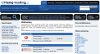 Přehled webhostingových, multihosting a VPS hosting programů s možností jejich pokročilého vyhledávání a porovnávání. Najděte si jednoduše vhodný hosting.